


The Eastern Europe Studies Centre Launches a Publication on China's Information Influence on the Baltic States
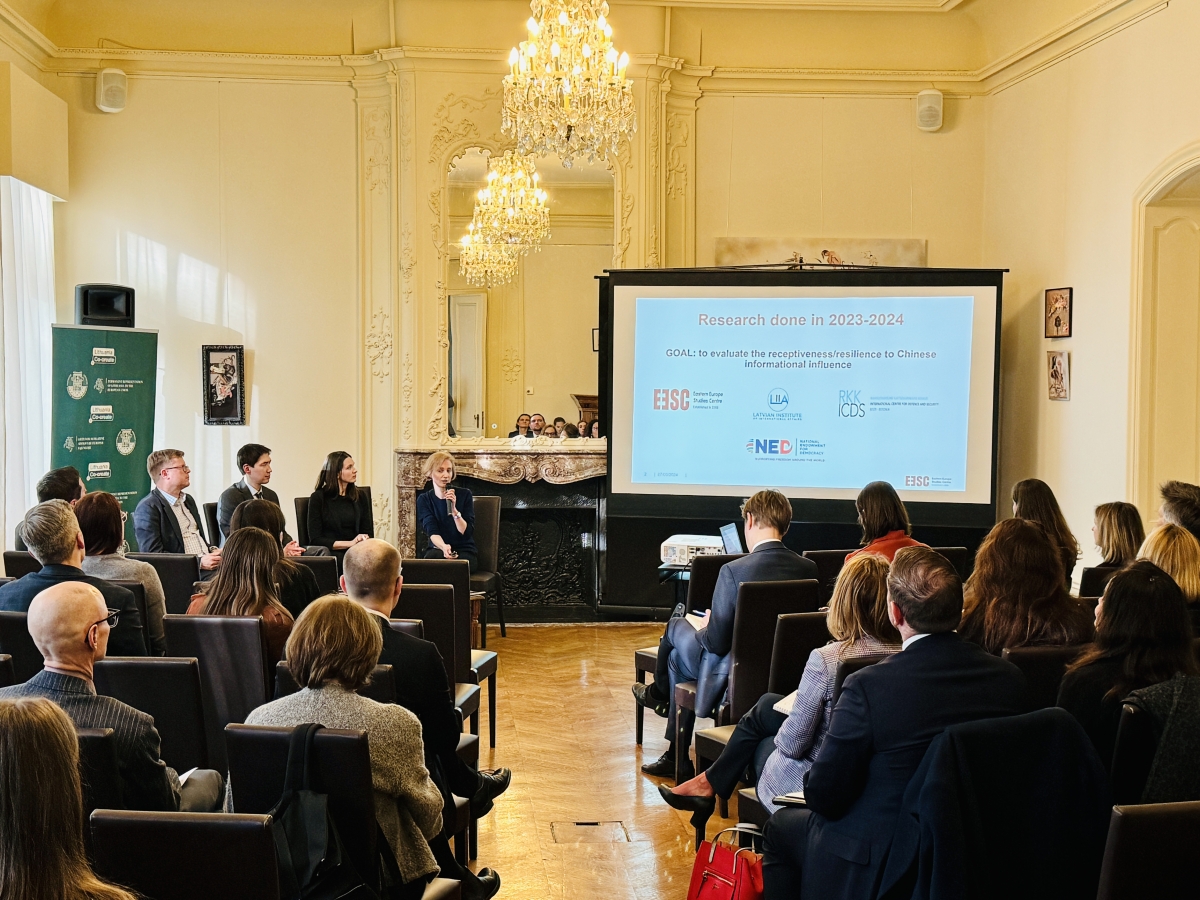
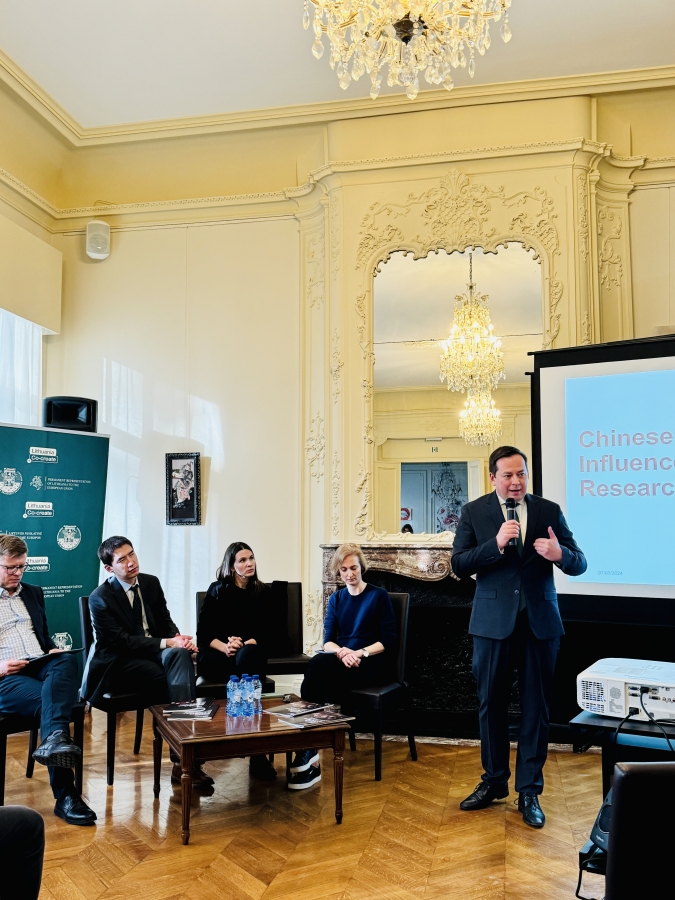
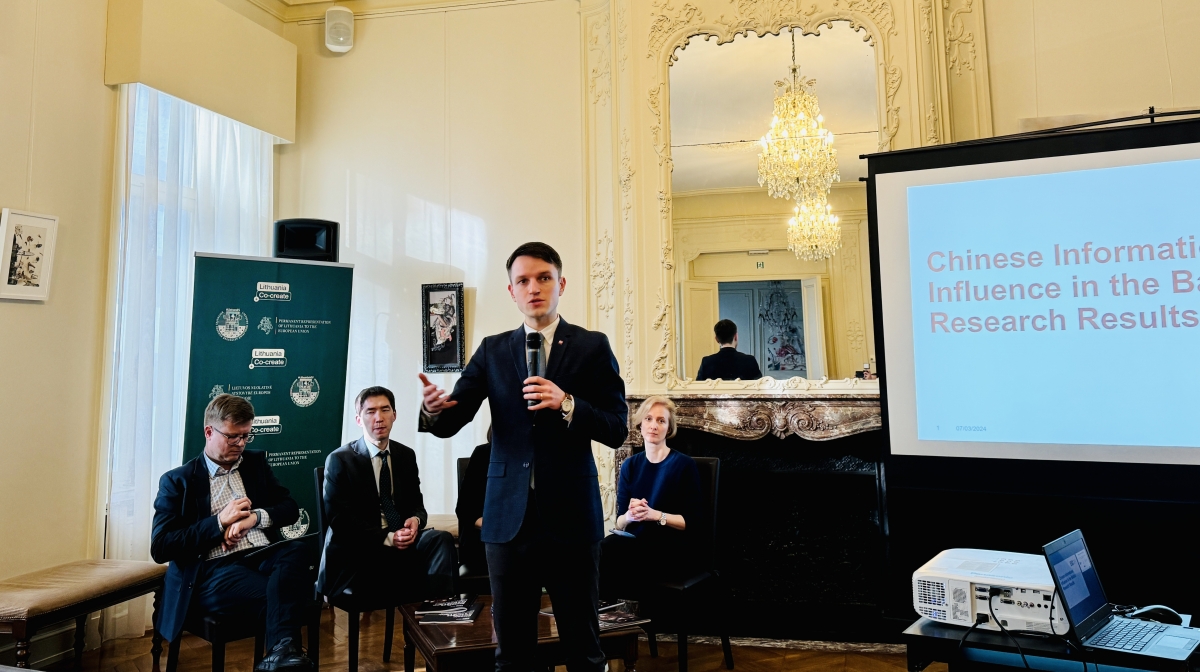
On March 7th, the Eastern Europe Studies Centre (EESC) presented its publication, "Classic Cleavages in a New Light: Chinese Informational Influence in the Baltics," at the Permanent Representation of Lithuania to the EU. The presentation of the results of this significant academic work began with an introduction by Ambassador Arnoldas Pranckevičius and Linas Kojala, the Head of the EESC.
The study presented is based on national research conducted by the East European Studies Centre (EESC) in collaboration with the Latvian Institute of International Affairs (Latvia) and the International Centre for Defence and Security (Estonia). Its aim was to assess the receptiveness and resilience of the societies of the three Baltic States to Chinese influence in the information domain.
One of the key findings of the new study is that, despite Beijing's challenges to the rules-based international order, the people of the Baltics perceive China as an economic superpower that contributes to the development of small countries like the Baltics.
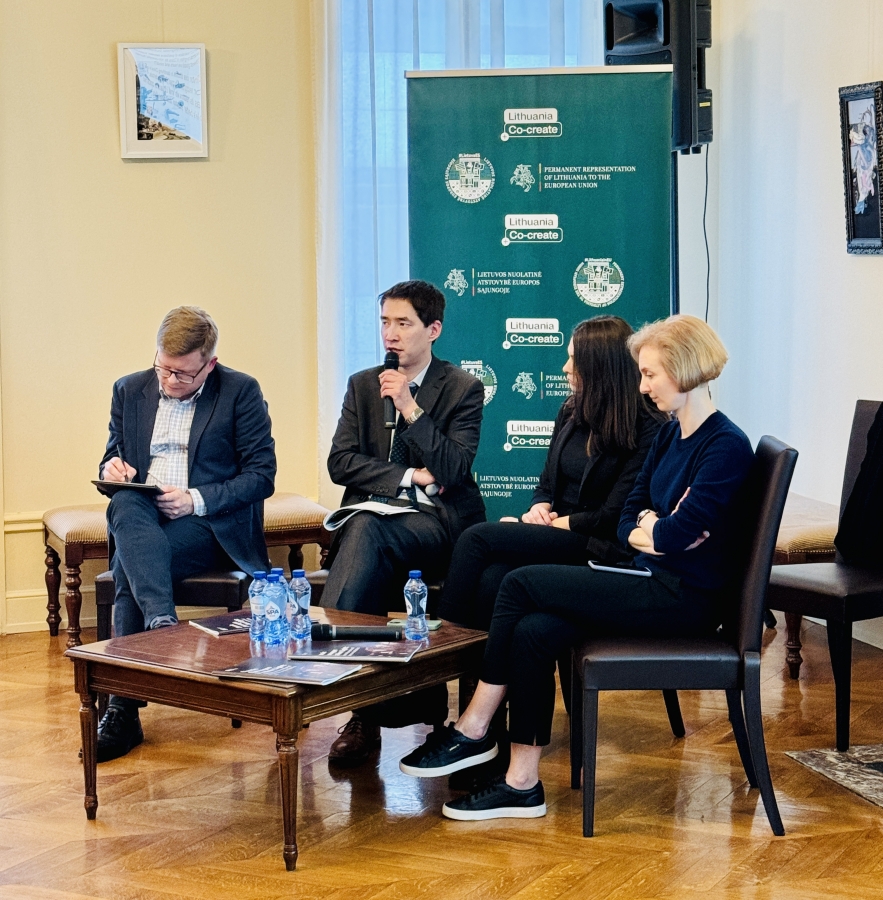
The panelists included Simona Merkinaitė (Senior Project Manager, EESC), Konstantinas Andrijauskas (Associate Professor of Asian Studies and International Politics at Vilnius University, Associate Expert at the Eastern Europe Studies Centre), Una Aleksandra Bērziņa-Čerenkova (Head of the China Studies Centre at Riga Stradins University, Head of Asia program at the Latvian Institute of International Affairs, and a member of the European Think Tank Network on China), and Tomas Jermalavičius (Head of Studies at the International Centre for Defence and Security (ICDS)).
For more information on the publication "Classic Cleavages in a New Light: Chinese Informational Influence in the Baltics," click here.
Our social media accounts in English


