


„The Road to Freedom“
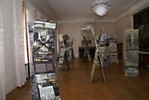
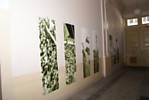
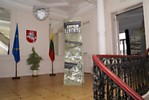
The premises of the Lithuanian Permanent Representation to the European Union are decorated with green banners, posters and x-formed stands, the latter reminding of the barricades that once stood around the Lithuanian Parliament. Banners, posters and stands are covered with pictures and summaries - they tell a story of the National Revival Movement (in Lithuanian - Sąjūdis) that was born twenty years ago. They come from the period when we all were striving to the same goal, namely, to live in an independent Lithuania, when we joined our hands in the Baltic Human Chain.
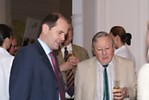
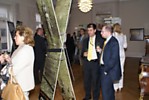
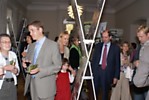
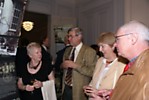
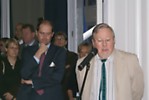
Songs that had once been sung twenty years ago are being played again, the ceilings of the main reception are alive with shots of documentary films of the period, the lapels of the guests are decorated with triangle three-colored pins. All this are the elements of the exhibition “The Road to Freedom”, on the occasion of 20th Birthday of the Sąjūdis Movement, which has been opened yesterday, on 16th July, by the Lithuanian Permanent Representative Ambassador Rytis Martikonis and the Member of the European Parliament Professor Vytautas Landsbergis.
"The history of the post-war Lithuania is a history of open and hidden resistance against the Soviet occupants. The Sąjūdis Movement is very important, while namely then the whole Lithuania rose unanimously and peacefully, led by one idea, one emotion. We told, openly and unanimously, to the Soviet Union “Enough, gentlemen comrades, we wish to live differently”, and we won,’ said the professor Vytautas Landsbergis in his opening speech.
The exhibition covers a period of time from 1940 lost independence to the Soviet occupation till the re-establishment and defense of independence in 1991. Photographs and stories feature a set of key episodes in the struggle of Lithuania against the Soviet totalitarian regime. They include armed resistance offered by partisans in 1944-1953, resistance to the Soviet regime observed in labour camps and deportation to Siberia, anti-Soviet initiatives and demonstrations, underground press, founding of the Lithuanian Freedom League and the Lithuanian Helsinki Group, desire for freedom as experienced by ordinary individuals.
The centerpiece of the exhibition is the Sąjūdis movement – its foundation, press coverage, rallies attended by thousands of people, proclamation of the Act of 11th March, Lithuanian resistance to the Soviet aggression in 1991, retention of freedom and statehood.
The epilogue of the exhibition tells about the country’s road and accession to the full-fledged membership in international organizations.
The initiators of the exhibition are the Lithuanian Parliament, Museum of Genocide Victims under the genocide and resistance Research Centre of Lithuania, Lithuanian National Museum.
The Representation will host the exhibition for a month, and then it will be moved to the European Parliament.
Our social media accounts in English


